Welcome to reading2success designed to support parents, child care providers and teachers in coaching children to reading success. Best practices for toddlers, preschoolers, and elementary school students will be discussed, reviewed and demonstrated. Although, we are known for reading, we have also included sections on writing and math!
Introduce
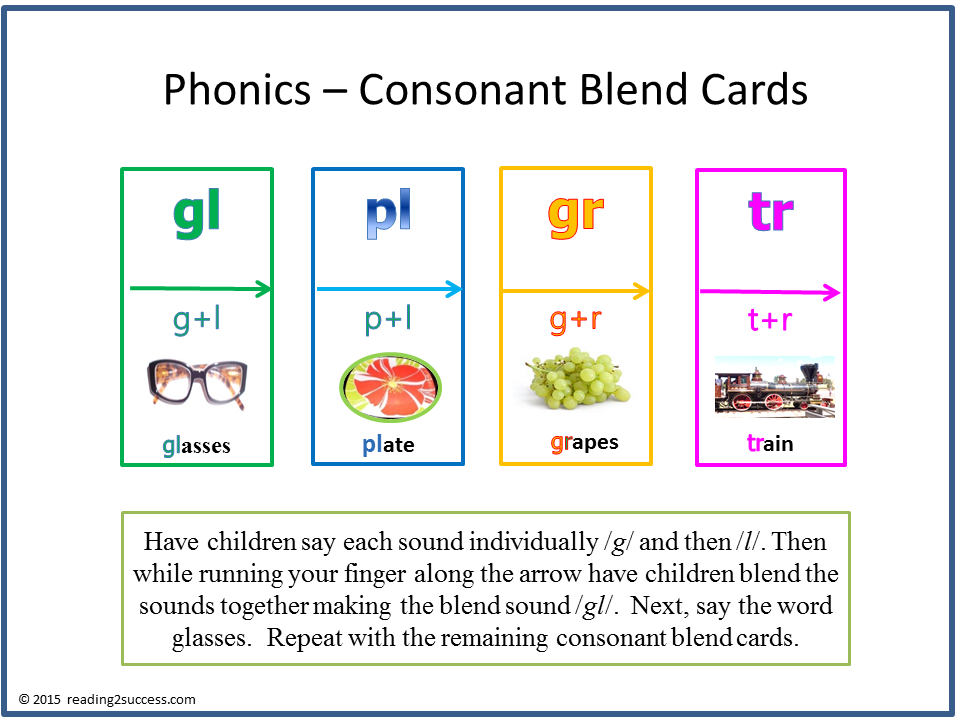
consonant blends one at a time using blend cards.Explain that when two or more consonants join
together they make a consonant blend. Example: /g/ + /l/
= /gl/.Each sound is heard, but
said/read quickly to form a blend. Have fun with the sorting and bingo activities
below.
Sorting Activity
Template for Sorting Board
Template for Sorting Cards
Using
your choice of a spinner or dice see who can complete their bingo card
first.Spin or roll the die to see the
choice of blend. Players take alternating turns. If a player can’t make a word
with the consonant blend shown he/she must pass. The first person who completes
all the words on their card wins.
Have
students review and practice nouns, verbs and adjective with dominoes.Each student adds a domino to the mat by
matching a word type (noun, verb, or adjective) to an unused domino that has been played.
The game is convenient to store. To make the folder all you need is decorative tape and two pieces of colored tag board. Place the mat in the folder and dominoes in the envelope and clip onto folder.
Reference poster for students if needed to review nouns, verbs and adjectives while playing the game
Template 1: In the example above the dominoes were printed on colored tag board making them colorful and sturdy.
A fun way to learn
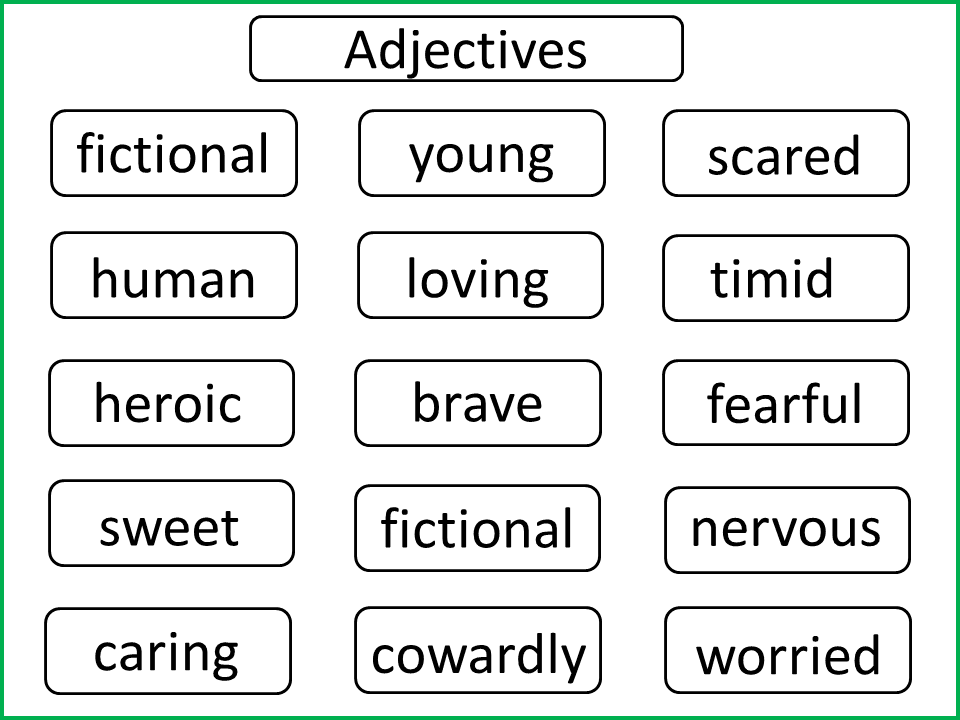
adjectives – In this activity children sort a set of adjectives that describe
either Dorothy or the Cowardly Lion, both characters of the Wizard of Oz. CUBEEZ
containers by Hallmark are used in this activity - Lift up the face of
Dorothy or the Cowardly Lion and under you will find containers. These
were used by the children to sort the adjectives.
Cowardly Lion and Dorothy containers used for Sorting
The list of adjectives printed and used in this activity
Children complete the activity by writing an adjective to complete each sentence.
Children are reading on their Independent Reading Level when Text difficulty is correctly matched to their current reading level ability. Text difficulty depends on several characteristics: word frequency, text structure, vocabulary knowledge, text layout and text features, illustrations, diagrams, captions... Below are some sample selections of increasing text difficulty.
Samples increasing in difficulty
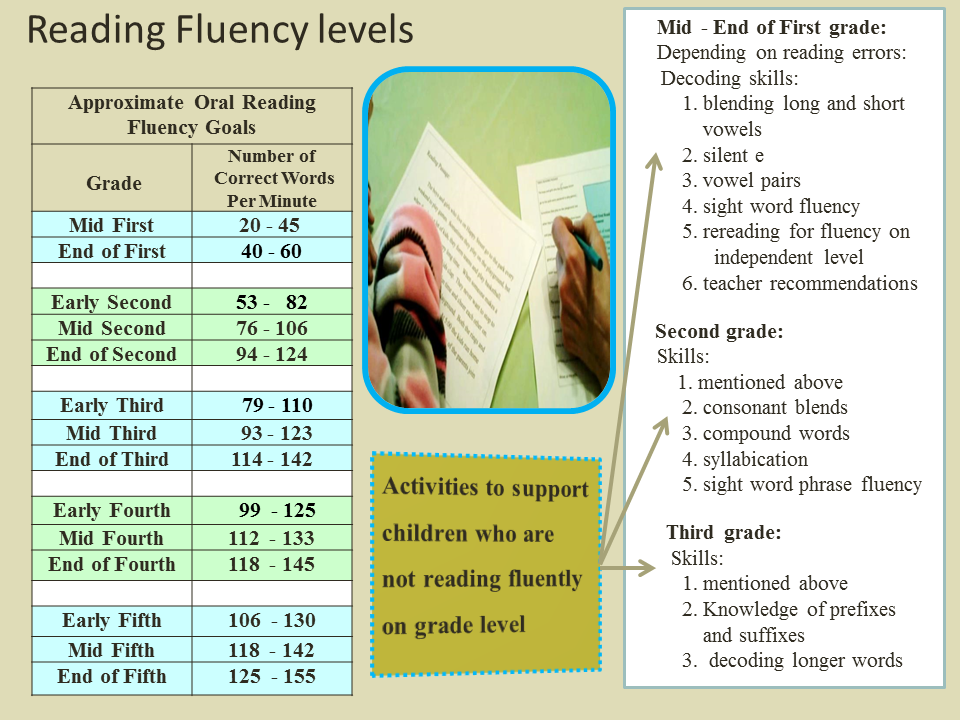
Runningrecords are given by teachers to assess students’ current reading level. As students read aloud, teachers record the number of words read per minute minus the number of errors made to determine the number of words read correctly. Running records are used to measure students' reading accuracy, automaticity, and prosody. After the timed read, students are asked a series of questions to measure their comprehension. Accuracy, automaticity, prosody, and comprehension are all considered when determining a student's current reading ability.
Fluency = Accuracy, Automaticity, and Prosody Chart
Below is an overview and demonstration activity video of a running record
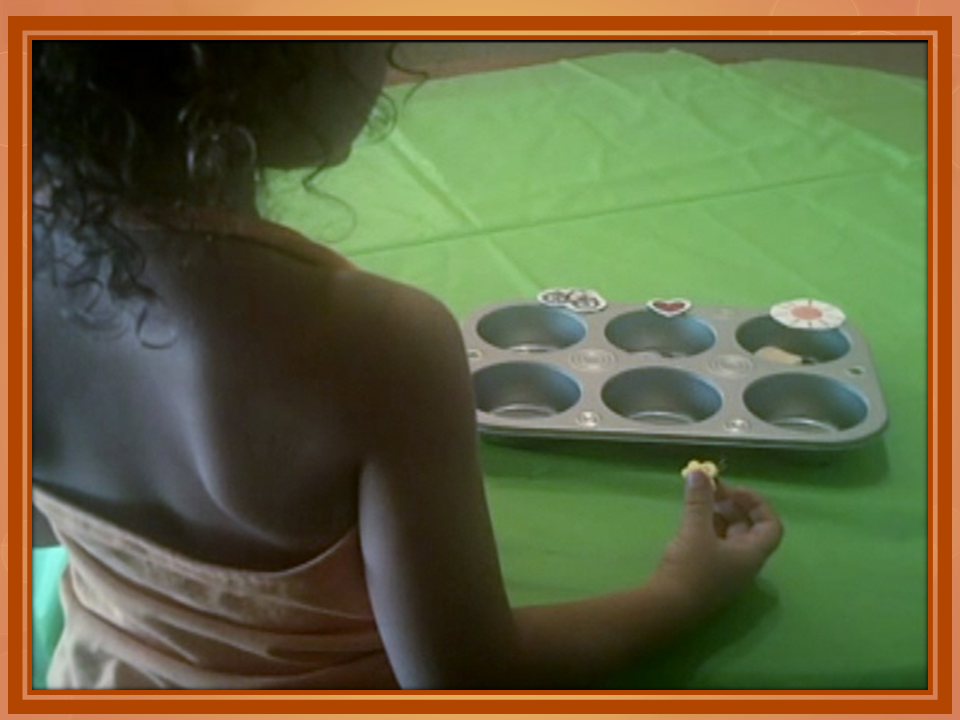
Beginning Sound Sort - Provide a cupcake pan for sorting. Begin by using 3 tins, gradually increasing to 6. Place pictures of items that have different beginning sounds into each tin. Say each word: bike, heart, and sun. Next, provide several items and/or pictures that begin with the three sounds. Have children sort the items/pictures according to their beginning sounds.
Sound Boxes - Promotes one to one correspondence with the individual sounds heard in a word. Begin with consonant vowel consonant words such as dog, cat, mat, (three letters represented by three sounds heard). Draw three boxes. Say the word - dog, repeat the word - dog so that children can hear each sound in the word. As they listen, children are to push up a counter for each sound heard. As they become familiar with the activity increase the boxes. For example draw four boxes, and say a variety of words that differ from one sound to four sounds: I, a, me, dog, cats, dogs......
Demonstration Video
How many sounds heard Have children sort pictures according to the number of sounds heard. This increases in difficulty since a sound may be represented by more than one letter. For example a vowel combination, two letters, represents one sound as in the word train. Five letters are represented by four sounds: /t/, /r/, /ai/, /n/.
Hearing Sounds in Words Video
Template for CVC Sound Boxes
Beginning Sound Template can used instead of cupcake tins. Have children sort pictures according to the beginning sounds of the shapes shown: star, triangle, diamond and heart. Provide items and/or pictures that begin with the sounds: /s/, /t/, /d/ and /h/.
Alphabet and Word Recognition Activity Write your child's name on a sentence strip. Read his/her name and say each letter in the name. Remember to point to each letter as you say its letter name. Provide your child with several magnetic letters. Have your child find the matching magnetic letter for each printed letter in his/her name. Place each magnetic letter over each printed letter in the correct order. Next print known words: daddy, mommy... and repeat above steps.
Timed Letter Identification Activity As your child becomes familiar with reciting the alphabet, have your child practice letter recognition. Begin by choosing 2 letters that are visually very different in shape such as t and s. Next, draw two circles on a white board. Write one of the letters above each circle. Provide several of the chosen letters for your child to sort. Scatter the letters below the circles. Have your child say the letter names as he/she sorts them into the appropriate circles. To increase difficulty, extend the activity to include three or four circles with three or four visually different shaped letters such as t, s, b and n
Materials Needed: A Sorting Mat - In the video example a magnetic slant board is used.
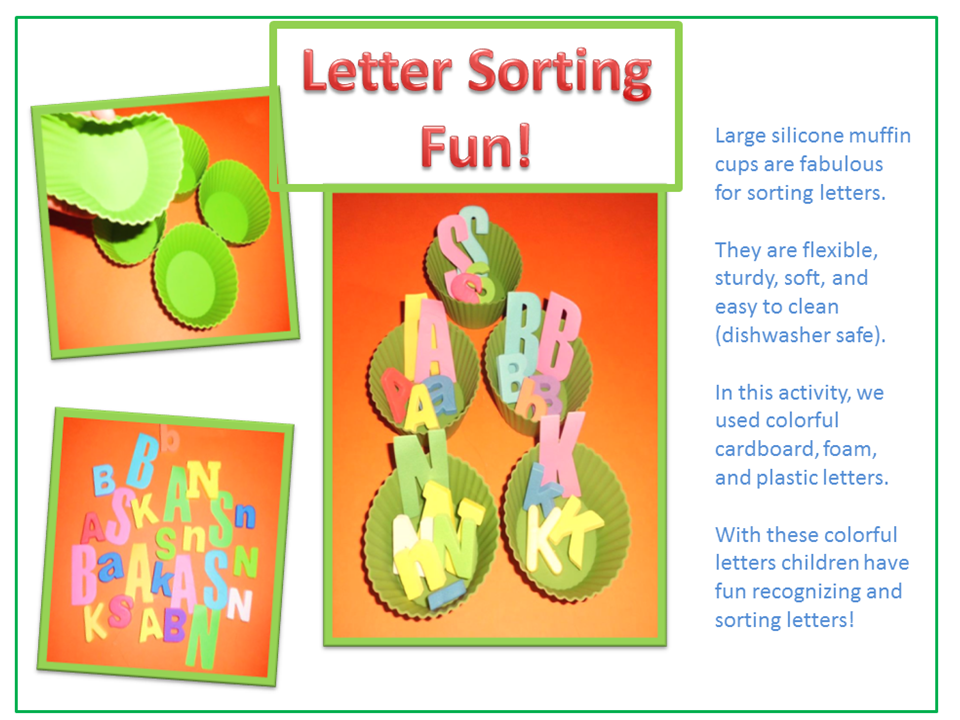
Letter Sorting Fun - Large Silicon Muffins Cups are also fabulous for sorting letters!
They are flexible, sturdy, soft and easy to clean. In this activity we used colorful cardboard, foam, and plastic letters of different sizes. We also used upper and lower case letters.
A variety of upper and lower case letters
How many letters in the word? Print familiar words on the word cards (child's name, cat, sat, dog... Have your child choose a word card.Read the word card with him/her. Next, have your child
choose the correct letters and place them in the correct
order to make the word. In this activity your child will learn that letters need to be
placed in the correct order to make a word.
Example with the word card/name Erick
Fill in the Missing Uppercase Letters - Just because a child can recite the alphabet doesn’t mean
she/he knows the letters.All too often,
children believe the letters - l, m, n, o, and p - are one letter.To help your child learn her/his letters, have
your child practice identifying the missing letters in the charts below.
There are 11 sight word lists to practice. Have children begin with the first list and eventually work through all 11 lists. Recognition of these words will increase reading fluency. Use video in the classroom or at home. Each list automatically changes to the next list in 10 seconds. Children love to chorally read them in class. Their goal is to read each list in its entirety before transitioning to the next list!
Flash cards are another great way to learn / practice sight words. Print sight word lists and sight word phrase lists on labels, peel and place them on colored index cards. Use a different color for each list. Sight word phrase lists can be viewed on this blog - Sight Word Phrase Lists Labels used are AVERY 5160.
Print words on labels and place them on index cards
Sight Word Lists 1-6
Sight Word Lists 7-11
Sight Word Practice Demonstration and 11 word lists. Pause video on the word list children are practicing.
All 11 sight word lists are on the video, following the flash card demonstration. Children will love practicing them over and over!
Sight Word List 2 - All 11 sight word lists can be found on video